Strength Training During Menopause | ONIT Epping
Strength Training During Perimenopause and Menopause
Does muscle weigh more than fat?
Some weeks, getting to the gym feels straightforward. Other weeks, interrupted sleep or changing energy levels can make your usual workout feel unexpectedly demanding. If that sounds familiar, your training plan can make room for it.
Strength training during perimenopause and menopause can help you build strength and support long-term physical function. You do not need an extreme routine, a particular body shape or previous lifting experience to begin. The useful starting point is a manageable programme that develops gradually and responds to how you are feeling.
This guide explains what resistance training can offer, how to get started and when to seek more individual advice.
Why strength training matters during menopause
Building strength for everyday life
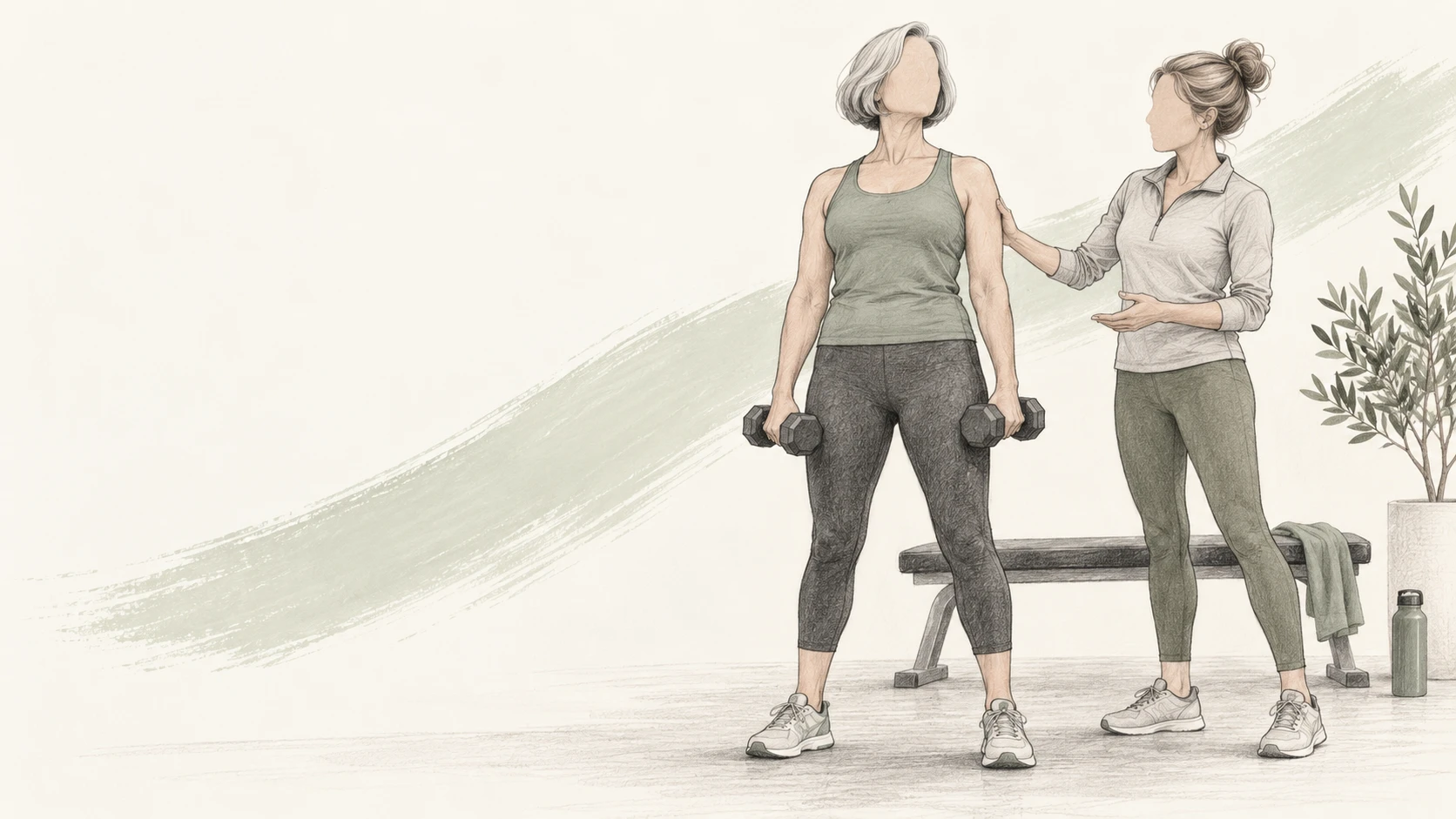
Resistance training means working against a load: your body weight, a resistance band, a machine or a free weight. Over time, appropriately challenging exercise can improve your capacity to lift, carry, push and get up from a chair.
Those abilities matter whether your goal is carrying groceries comfortably, staying active with family or feeling more capable in the gym. Progress can be practical: completing a movement with better control, using a little more resistance or finding a familiar task easier.
The American College of Sports Medicine’s latest guidance supports resistance training for strength, muscle development and physical performance in healthy adults. That is broad adult evidence, rather than a promise about menopause symptoms.
Supporting bone health
Bone loss can accelerate around menopause. Strength training is one way to support bone health, alongside appropriate nutrition and any assessment or treatment you need. The benefits depend on the exercise, the loading and your starting point; simply holding a light weight does not guarantee stronger bones.
If you have osteoporosis, a previous low-trauma fracture or concerns about your bones, ask your treating clinician or an accredited exercise physiologist about suitable loading before attempting unfamiliar heavy lifts or jumping exercises.
What exercise can—and cannot—do for symptoms
Hot flushes, night sweats and disrupted sleep can affect how a training day feels. NSW Health’s menopause toolkit recommends a broader approach to midlife wellbeing that includes physical activity, nutrition and appropriate clinical care.
Exercise is valuable for general health, but it is not an established treatment for hot flushes. The Menopause Society notes that evidence for exercise specifically relieving these symptoms is limited or has not shown significant benefits in trials.
Be cautious about programmes promising to “balance your hormones”, eliminate symptoms or reverse menopause. Training can sit alongside medical care. Persistent symptoms deserve a conversation with your healthcare professional, even when you are exercising regularly.
How to start strength training during perimenopause
Choose a realistic weekly rhythm
Australian movement guidance recommends muscle-strengthening activity on at least two days each week for adults aged 18–64. If you are currently inactive, build towards that target at a pace you can manage.
For a beginner, two sessions on separate days can be a useful planning option. For example, you might train on Tuesday and Friday, leaving time between sessions to see how you recover. This is a practical starting example, not a requirement to train through illness or significant symptoms.
Learn a small set of movements
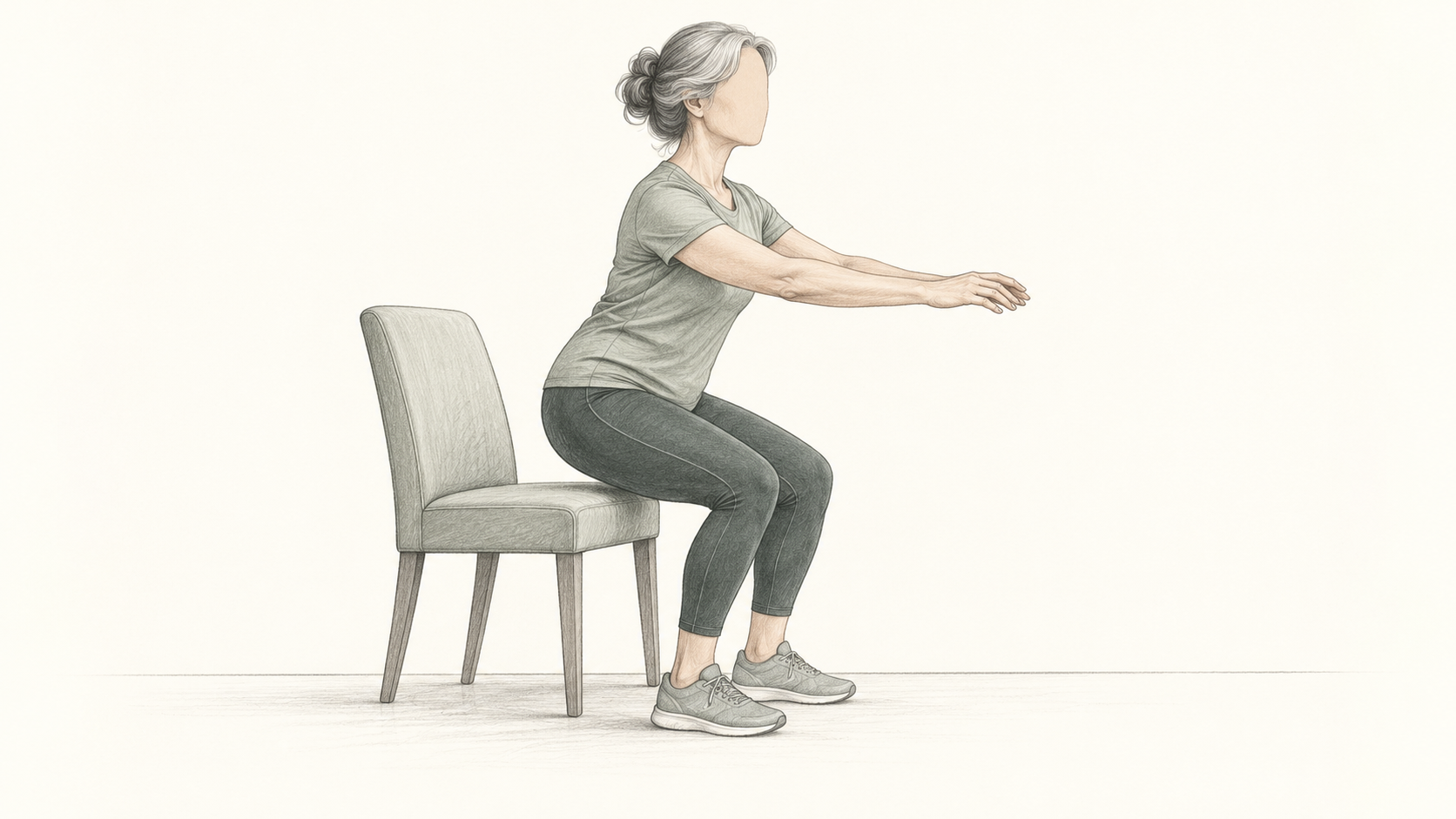
A coach can help you choose exercises that cover the major muscle groups and suit your experience. Possible starting movements include:
- Sitting down to and standing up from a stable chair.
- Learning a hip hinge before adding an appropriate load.
- A wall or raised push-up for an upper-body pushing movement.
- A supported row using a suitable machine or resistance band.
- A supported calf raise or another appropriate lower-leg exercise.
You do not have to use every option immediately. Start with movements you understand, keep the setup simple and ask for alternatives when something feels uncomfortable or confusing.
Build challenge gradually
An introductory session might use one or two sets of a few selected exercises, with rest between sets. The repetitions and resistance should fit your ability and health history. Finish a set while you can still move with control, rather than forcing extra repetitions as technique deteriorates.
When the same task becomes consistently manageable, your coach might add a small amount of resistance or a few repetitions. Change one thing at a time so you can judge the response. ACSM’s guidance supports individualisation and shows that training to failure is not necessary for the average healthy adult.
Adjust the session when your needs change
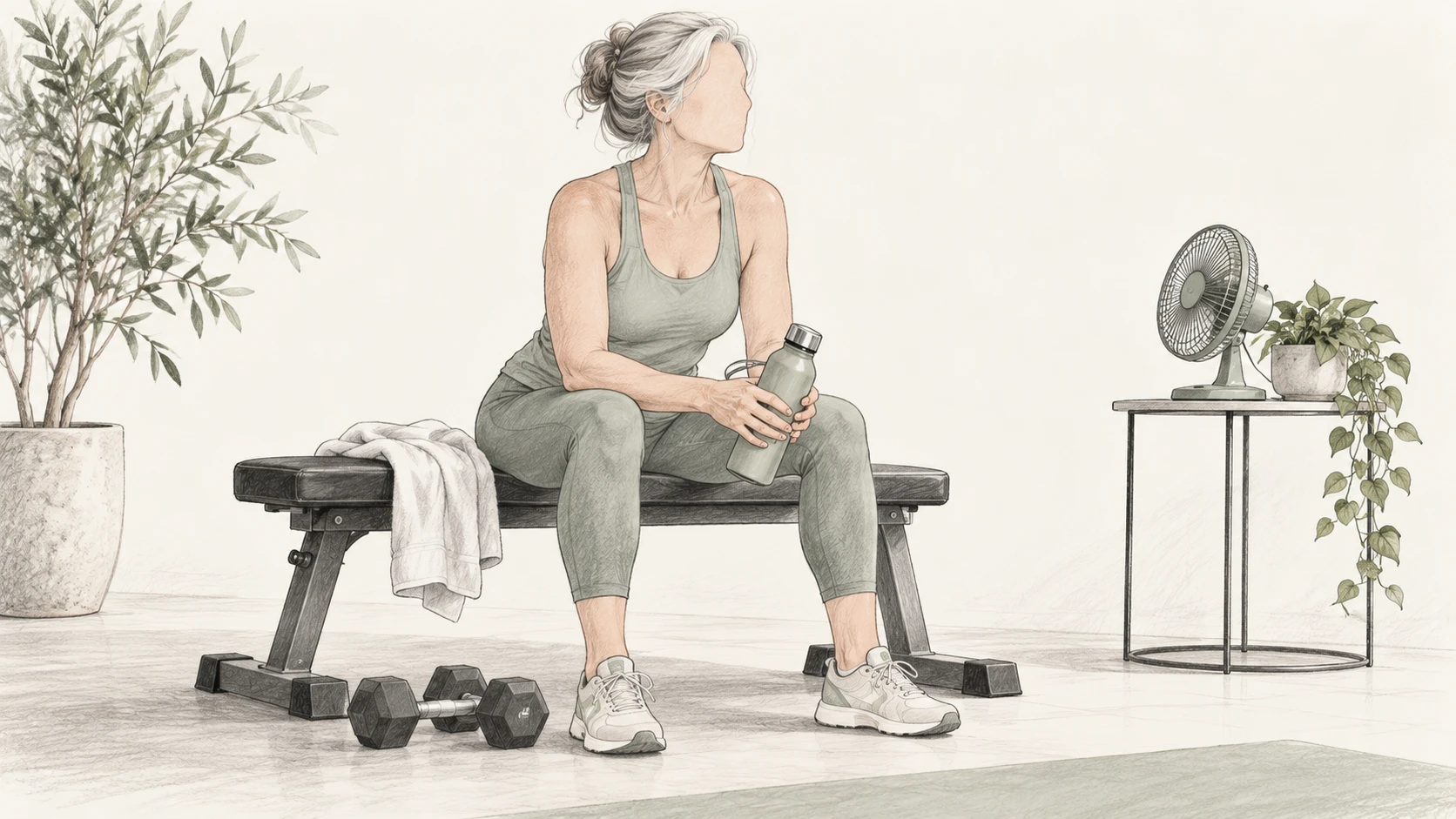
A flexible plan gives you options between completing everything and abandoning the routine. You might shorten a session, take longer rests or repeat an easier version of an exercise. The aim is to match the day’s work to your capacity.
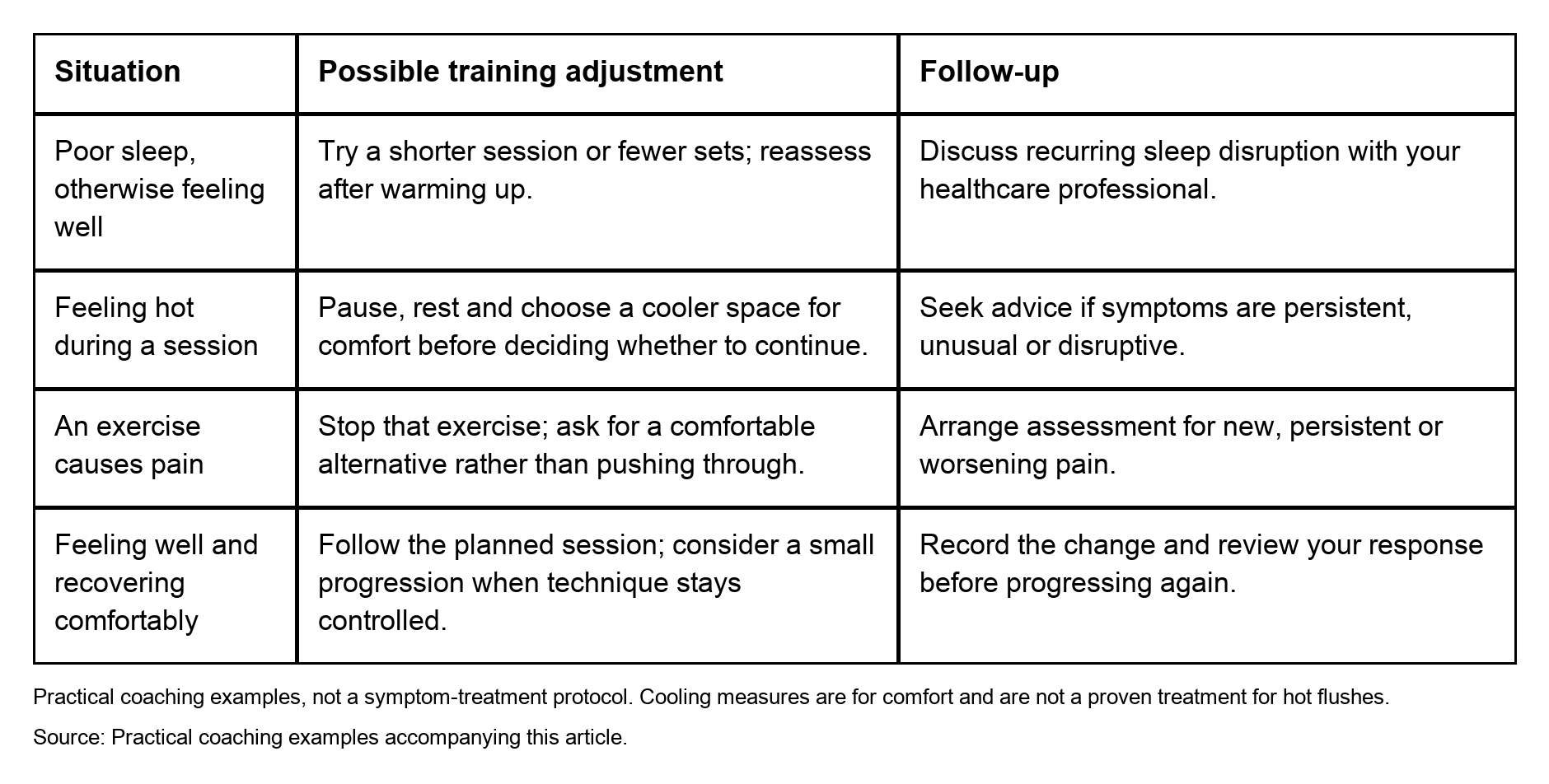
Practical coaching examples, not a symptom-treatment protocol. Cooling measures are for comfort and are not a proven treatment for hot flushes.
Keep a brief record of the exercises you completed and how the session felt. You do not need a detailed symptom diary to train, but a few notes can help you explain patterns to your coach or clinician.
Make room for recovery and everyday movement
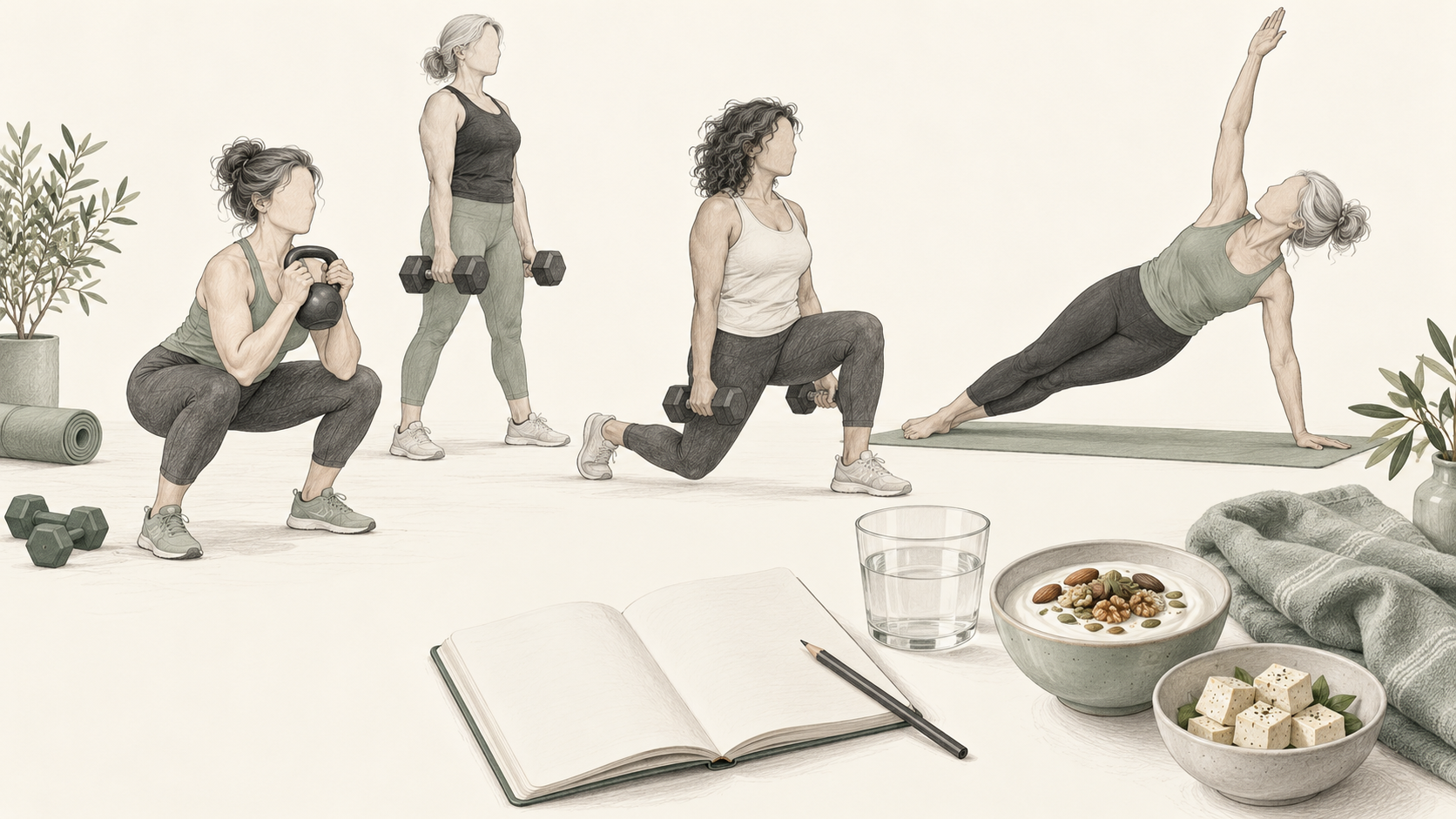
A training routine should fit around eating, sleeping and the rest of your life. Allow time between demanding sessions, eat regular balanced meals and include protein-containing foods such as eggs, yoghurt, fish, tofu or legumes according to your preferences and needs.
Avoid turning every tired day into a reason to add more exercise or restrict food. If you are struggling with nutrition, an accredited practising dietitian can provide individual advice.
Keep enjoyable movement in your week too: walking, cycling or another activity you like. Strength training is one part of a broader exercise routine; NSW Health’s toolkit also includes aerobic activity, balance and flexibility.
When to get individual support
Tell your coach about relevant diagnoses, injuries and advice from your treating professionals. New symptoms should not automatically be attributed to menopause.
Seek individual guidance for pelvic heaviness, exercise-related leakage, persistent pain, osteoporosis or a recent fracture. Your GP can help you find appropriate care, including physiotherapy or exercise physiology where needed. Stop exercising and seek urgent medical help for chest pain, fainting or severe unexpected breathlessness.
A coach can help with exercise selection and progression. Diagnosing symptoms and deciding on medical treatment belong with your healthcare team.
Frequently asked questions
Is it too late to start lifting after menopause?
No. Previous gym experience is not a prerequisite. Choose a starting level that matches your current ability, learn the movements and build gradually. Your health history may influence which exercises are appropriate.
Do I need to lift heavy weights straight away?
No. Begin with a load you can control. Resistance can increase as your confidence and capacity develop. Bands, body-weight movements and machines can all be useful; there is no single compulsory piece of equipment.
Should I skip training after a bad night’s sleep?
It depends on how you feel and whether you can exercise safely. A shorter, easier session may be suitable when you otherwise feel well. If you feel unwell or unsafe, rest and seek advice as needed. Repeated sleep problems deserve attention beyond the gym.
Will strength training get rid of menopause belly fat?
It cannot selectively remove fat from your waist, and changes in body size are not guaranteed. Strength, movement confidence and daily function are useful goals even when the scales or clothing size do not change.
Start with a conversation at ONIT in Epping
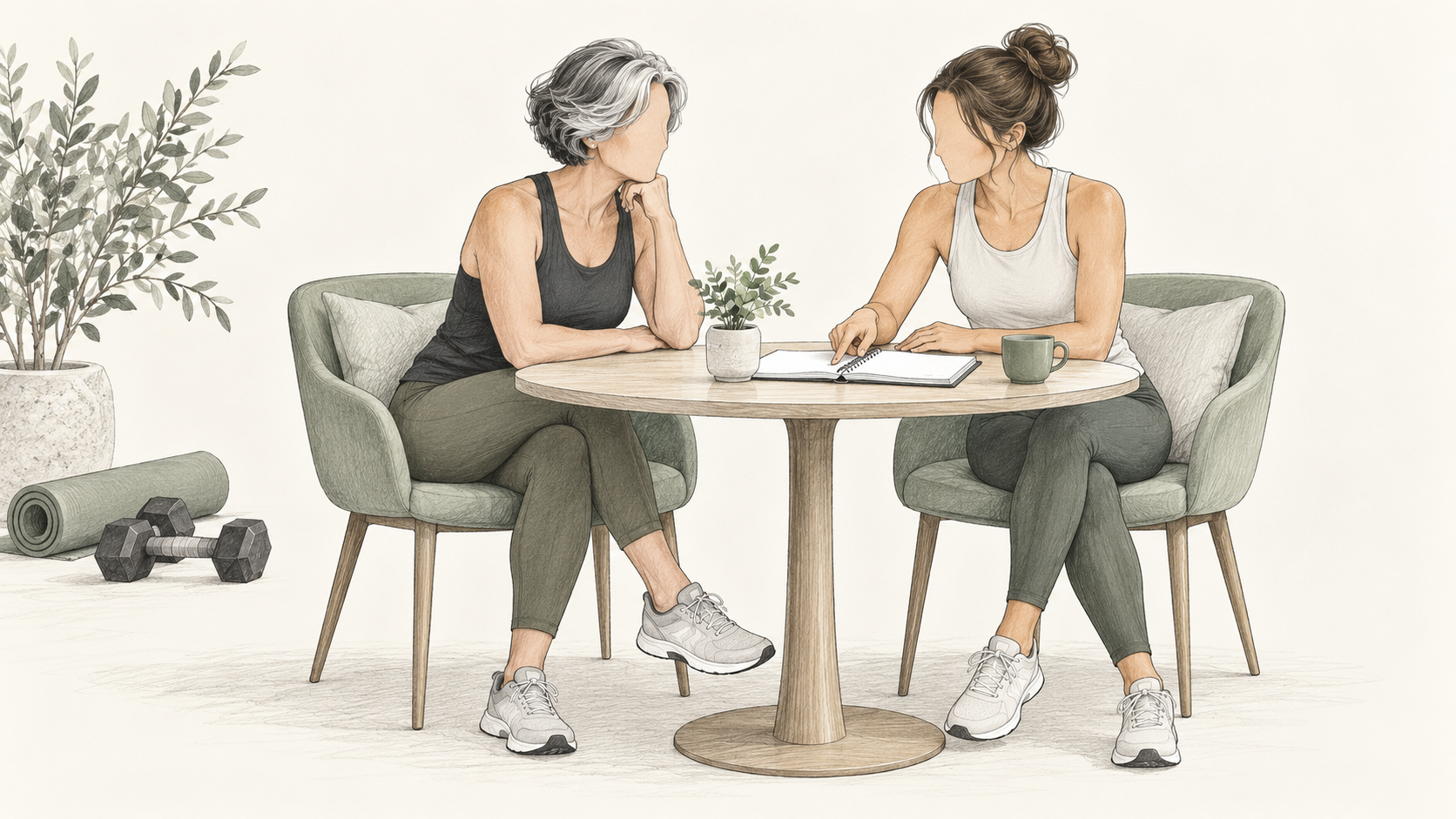
If you would like help building a manageable routine, explore personal training at ONIT. Bring your goals, current experience and any relevant guidance from your healthcare team so you can discuss a suitable starting point.
Book a Free No Sweat Intro through ONIT’s website to talk about your options. This is a consultation, not a workout or free training trial. You can read more about getting started in the ONIT FAQs.
This article provides general education, not individual medical advice. Exercise should complement appropriate healthcare. Discuss persistent or concerning symptoms and any treatment questions with a qualified healthcare professional.
Evidence note
The discussion of resistance training, muscle strength and physical function is informed by the [American College of Sports Medicine’s 2026 resistance training guidance] for healthy adults and the [Australian Government’s physical activity recommendations for adults]. Information about exercise and bone health around menopause is informed by [Jean Hailes for Women’s Health] and the [NSW Agency for Clinical Innovation’s Menopause Care Clinician Toolkit]. The distinction between exercise for general health and exercise as a treatment for hot flushes reflects [The Menopause Society’s patient guidance]. General adult resistance-training evidence should not be interpreted as proof of menopause-specific symptom relief. The suggested weekly schedule and session-adjustment table are practical examples, not a clinically validated menopause treatment protocol.
Health disclaimer
This article provides general health and fitness information only. It is not medical advice, diagnosis, treatment or a personalised exercise or nutrition plan. Individual needs and exercise suitability vary. Consult an appropriately qualified medical professional, Accredited Exercise Physiologist or Accredited Practising Dietitian for advice specific to your health, circumstances and goals.
References
1. American College of Sports Medicine. (2026). [ACSM Unveils Landmark 2026 Resistance Training Guidelines — First Update in 17 Years](https://acsm.org/resistance-training-guidelines-update-2026/).
2. Australian Government, Department of Health, Disability and Ageing. [Recommendations for adults (18 to 64 years)](https://www.health.gov.au/topics/physical-activity/24-hour-movement-guidelines-for-all-australians/recommendations-for-adults-18-to-64-years).
3. Jean Hailes for Women’s Health. [Feeling seen and strong – the power of strength training for women](https://www.jeanhailes.org.au/stories/feeling-seen-and-strong-the-power-of-strength-training-for-women/).
4. NSW Agency for Clinical Innovation. [Wellbeing and lifestyle — Menopause Care Clinician Toolkit](https://aci.health.nsw.gov.au/projects/menopause/assessment-management/wellbeing-lifestyle).
5. The Menopause Society. [Hot Flashes](https://menopause.org/patient-education/menopause-topics/hot-flashes).